
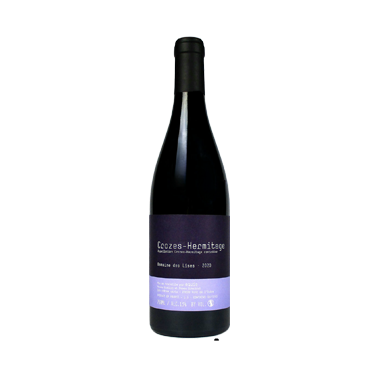
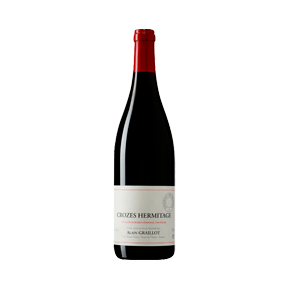
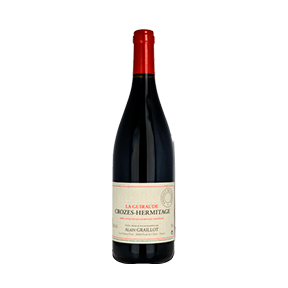
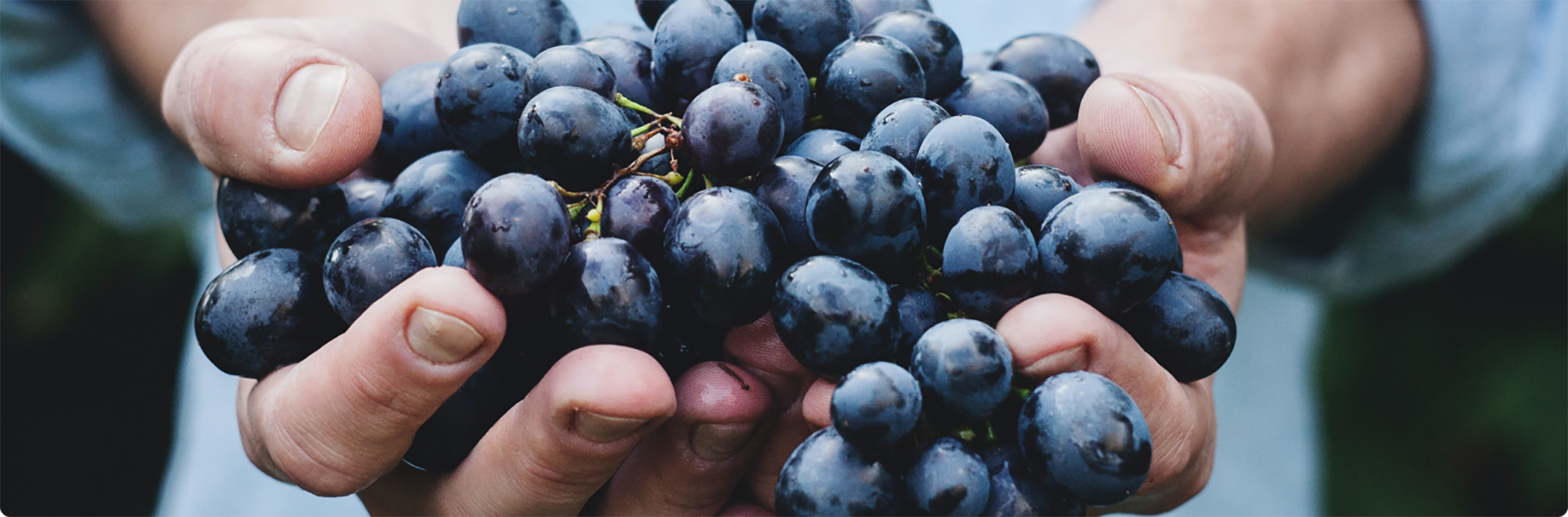


Crozes-Hermitage is a French controlled designation of origin (AOC) located in the northern wine region of the Vallée du Rhône. Most of the wines produced here are reds made with the Syrah grape, sometimes blended with small amounts of white grapes such as Roussanne or Marsanne. Some white wines are also made from Marsanne and/or Roussanne.
In 1846, a panel of experts praised the wine for its resemblance to the wines of Hermitage. The designation was officially defined in 1937 and extended in 1952.
Crozes-Hermitage is known for its large amount of cooperative wine. Cave de Tain, a large cooperative, uses half of the grapes grown. Another major producer, Jaboulet, takes a large portion of the other half and also owns its own vineyards. While a small amount of white grape may be included when producing red wines in this AOC, more and more 100% Syrah varietal wines are being produced.
Crozes-Hermitage is a French controlled designation of origin (AOC) located in the northern wine region of the Vallée du Rhône. Most of the wines produced here are reds made with the Syrah grape, sometimes blended with small amounts of white grapes such as Roussanne or Marsanne. Some white wines are also made from Marsanne and/or Roussanne.
In 1846, a panel of experts praised the wine for its resemblance to the wines of Hermitage. The designation was officially defined in 1937 and extended in 1952.
Crozes-Hermitage is known for its large amount of cooperative wine. Cave de Tain, a large cooperative, uses half of the grapes grown. Another major producer, Jaboulet, takes a large portion of the other half and also owns its own vineyards. While a small amount of white grape may be included when producing red wines in this AOC, more and more 100% Syrah varietal wines are being produced.
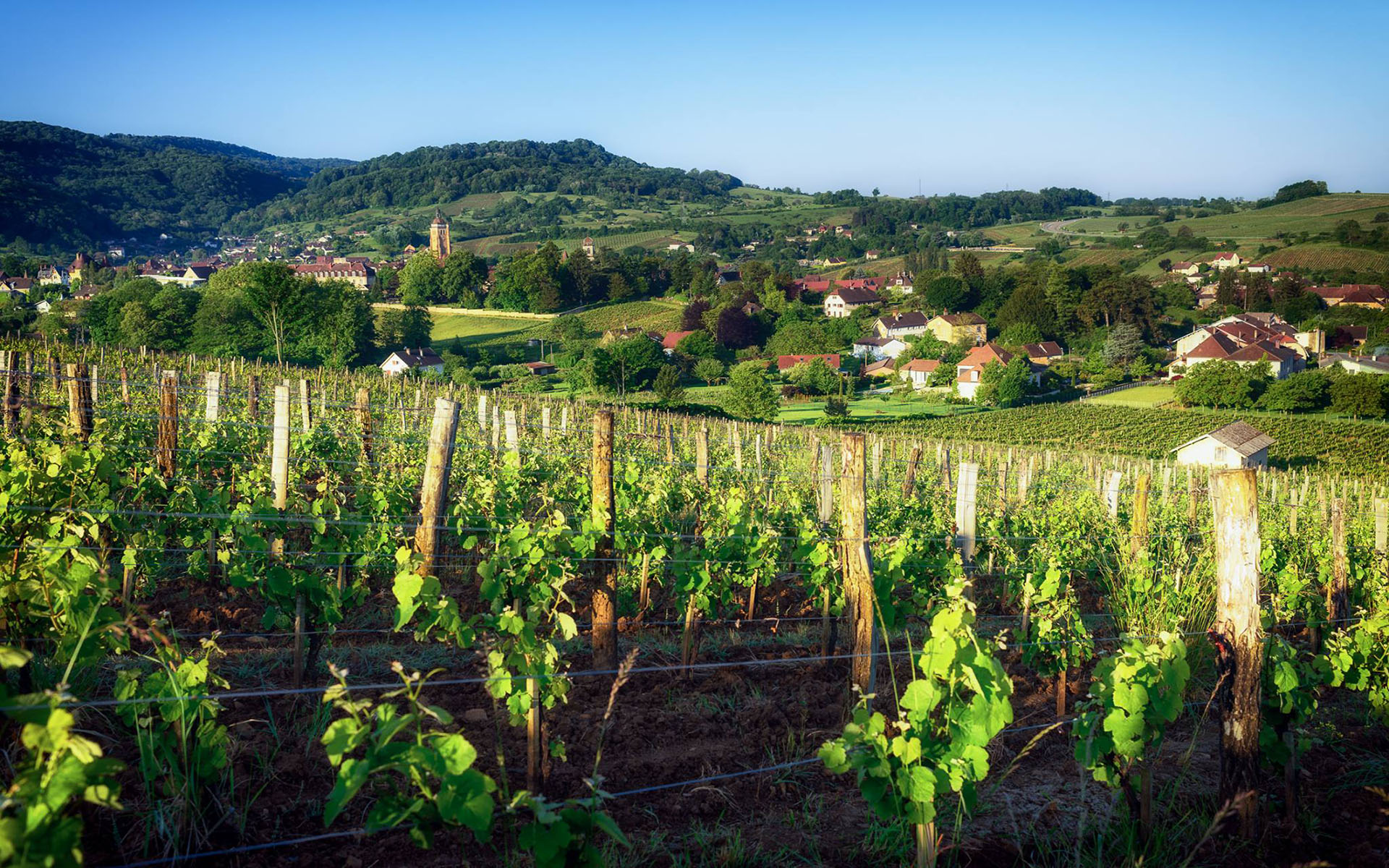
The Jura region is one of the smallest in France, with 1,850 hectares stretching across an area about 80 kilometers long from north to south, in a landscape of forested slopes with rugged topography shaped by the mountains that bear the same name. It is located near the border with Switzerland.
Jura is not only a wine region but also famous for its cheeses, especially Comté.
The climate of Jura is similar to that of Côte d'Or, with warm and dry summers, and very cold winters. The locations on the slopes differ from those in the valley. In the former, heights can reach up to 1,300 m, while in the western strip, the land does not exceed 1,000 m. Vines are always planted with a southern orientation to make the most of the sun's rays in this cool climate.
The soils are made up of limestone and marl from the Jurassic period, which is said to have been named after the region, as its mountains represent the geological changes that occurred 200 million years ago.
The Champagne region is located about 150 km from Paris, in the northern part of France, in the province that bears its name. European Union legislation and the laws of most countries reserve the term Champagne exclusively for wines originating from this region.
Vines were planted in this area as early as the time of Charlemagne. Later, the Counts of Champagne and several kings, such as Louis X of France and Louis XIV, would follow suit. Even in the Middle Ages, Pope Urban II declared the wine from Aÿ (the term used to refer to all wines from the region at that time) as the best in the world. The big leap came in the 19th century, when Champagne production grew from 300,000 bottles in 1800 to 20,000,000 bottles five decades later. For a long time, Champagne and Burgundy competed for dominance in wine production in France, to the point of nearly causing a Civil War. The conflict subsided when Champagne wine producers stopped producing regular wine and focused on the production of sparkling and effervescent champagne. As the bubbles became more popular, doctors across France and Europe spoke and wrote about their health benefits, even claiming that they could cure malaria.
Burgundy is a wine region in eastern France. Its wines, along with those from Bordeaux and Champagne, are among the most prestigious in the world. The Burgundy vineyard stretches over 250 kilometers from the north of Chablis to the south of the Mâcon region.
It is not precisely known who introduced the vine to Burgundy, but it is believed to have existed since the 2nd century. In the year 312, the philosopher Eumene provided the first description of the Burgundy vineyard. The establishment of Christianity helped spread the vineyard through the most important abbeys, such as the Abbey of Cluny for Mâconnais and Chalonnais, and the Abbey of Cîteaux with the plantations of Côte d'Or, Chalonnais, and Chablisien. From around the year 900 until the French Revolution, the vineyards of Burgundy belonged to the Catholic Church. During this period, the Clos (vineyards) were established. The first was founded in the year 640, and in 1128, the monks of the Abbey of Pontigny continued developing the famous Chablis vineyard. Throughout the Middle Ages, the wines were prominently featured on the tables of the Lords.